Paying for CO2 while venting your own straight out of the fermenter? B.Effect Brewing Co. in Wanaka has stopped doing both. With Corporate Partner Viniquip, they’ve installed a Dalum CO2 Recovery Plant that captures the CO2 their beer already makes and puts it back to work in the brewery, cutting costs, securing supply and shrinking their footprint. Here’s how it works and what it could mean for your brewery.
What the Dalum CO2 Recovery Plant does and how it works
The Dalum CO2 Recovery Plant turns a brewery by-product into a valuable resource. During fermentation, yeast naturally produces large volumes of CO2 that would traditionally be vented to atmosphere. The Dalum system captures this fermentation CO2, as well as CO2 used during tank purging, purifies it, compresses and liquefies it, then stores it ready to be reused around the brewery for applications such as carbonation, tank purging and packaging.
The result is a simple circular process: the brewery captures the CO2 it is already producing and reuses it instead of continually purchasing CO2 from an external supplier. Dalum states its systems produce 99.9%+ purity CO2, and the plant automatically adjusts its capacity to suit the amount of CO2 being generated from fermentation.
The B.Effect Brewing Co. installation in Wanaka and what it means for them
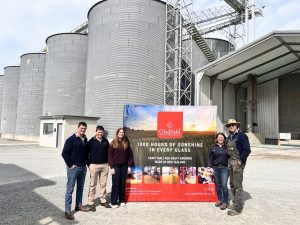
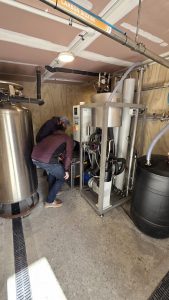
In late October, Viniquip and Dalum Equipment completed the installation and commissioning of a Dalum Micro CO2 Recovery Plant at B.Effect Brewing Co. in Wanaka. The Micro plant supplied is designed around a nominal 7kg/hr capacity, with commissioning successfully completed on 27 October. Andrew Duke, James Hay and Hayden Bulluss also completed operator training during commissioning.
The most exciting part was seeing it perform in the real brewery environment. Viniquip posted on their socials the system recovering CO2 from B.Effect Brewing Co.’s fermenters at 7kg/hr shortly after start-up.
And it didn’t stop with commissioning. In the first two weeks they already recovered a little over 600kgs of liquid CO2 and using it in their brewery, with a 2 to 3 year payback estimated. For B.Effect Brewing Co. that means taking something they previously released to atmosphere and turning it into a useful brewery input, reducing their exposure to external CO2 supply while improving the sustainability of their operation.
What savings or benefits can a brewery expect?
The economics will vary according to brewery production, current CO2 consumption and the price being paid for delivered CO2, but the benefits fall into three clear areas:
Lower CO2 costs.
Every kilogram recovered is CO2 the brewery potentially doesn’t need to buy. Viniquip’s pre-installation correspondence for B.Effect Brewing Co. estimated an expected 2 to 3 year ROI while targeting CO2 self-sufficiency.
Every kilogram recovered is CO2 the brewery potentially doesn’t need to buy. Viniquip’s pre-installation correspondence for B.Effect Brewing Co. estimated an expected 2 to 3 year ROI while targeting CO2 self-sufficiency.
Greater supply security.
Rather than being completely dependent on deliveries, the brewery has its own source of CO2 whenever it is fermenting. Dalum describes this as giving breweries control over their own CO2 source and reducing or potentially eliminating their reliance on industrial CO2.
Rather than being completely dependent on deliveries, the brewery has its own source of CO2 whenever it is fermenting. Dalum describes this as giving breweries control over their own CO2 source and reducing or potentially eliminating their reliance on industrial CO2.
A significant sustainability benefit.
Instead of venting fermentation CO2 and then purchasing industrial CO2 to bring back into the brewery, the same gas is captured and reused. Dalum and Viniquip estimate that each tonne of fermentation CO2 recovered and reused can reduce the brewery’s CO2 footprint by up to two tonnes compared with sourcing industrial liquid CO2.
Instead of venting fermentation CO2 and then purchasing industrial CO2 to bring back into the brewery, the same gas is captured and reused. Dalum and Viniquip estimate that each tonne of fermentation CO2 recovered and reused can reduce the brewery’s CO2 footprint by up to two tonnes compared with sourcing industrial liquid CO2.
Any brewery serious about gaining B Corp status needs CO2 recovery. According to Brian Watson, the Dalum at Good George was a key component in them recently attaining B Corp status.
For Viniquip, the B.Effect Brewing Co. project is a great example of sustainability making commercial sense. You are not asking a brewery to change what it produces. You are simply capturing something it already produces, turning it into a valuable resource and putting the savings back into the business.
If you’re currently buying CO2 while venting fermentation CO2 to atmosphere, it may be worth running the numbers. Viniquip can complete a brewery-specific Dalum feasibility study based on your annual production, fermentation schedule, CO2 usage and current CO2 costs to estimate how much you could recover and what the likely payback looks like. Dalum specifically recommends carrying out this feasibility study for each brewery because every operation is different.
Get in touch with Aaron at aaron@viniquip.co.nz or visit www.viniquip.co.nz